Original Version
Behind the song
"When the Saints Go Marching In" (or simply “The Saints”) is a black spiritual.
Although it originated as a Christian hymn, it is often performed by jazz bands.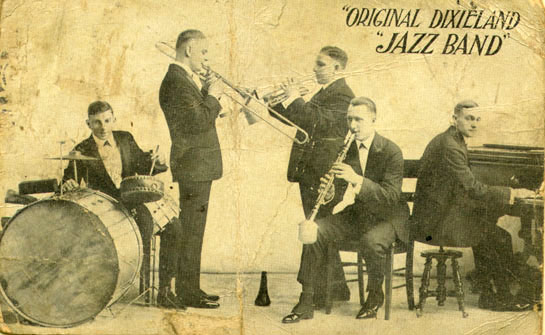
The song was performed and recorded on May 13, 1938 by Louis Armstrong and his orchestra.
The origins of this song are unclear. Apparently, it evolved in the early 1900s from a series of gospel songs with similar titles, including "When the Saints Are Marching In" (1896) and "When the Saints March In for Crowning" (1908).
Older versions were slow and majestic, but over time, the recordings became more rhythmic.
The lyrics of the song are apocalyptic, taking much of their images from the Book of Revelation.
The trumpet is the way the Last Judgment is announced. As the hymn expresses the desire to go to Heaven, depicting the saints entering (through the Pearl Doors), it is very appropriate to perform at funerals.
In the New Orleans tradition, it is interpreted as a funeral march, "jazz funeral", in the processions that carry the coffin to the cemetery.
Nowadays it is rare to hear it as religious music, it is rather heard as an irreverent folk song related to the "dixie" (Dixieland).
Dixieland, sometimes called traditional jazz, is a style of jazz based on music that developed in New Orleans in the early 20th century.
The 1917 recordings of the Original Dixieland Jass Band (which soon changed the spelling of its name to the "Original Dixieland Jazz Band") raised awareness of this new style of music. The musical elements that characterize this style are the instrumentation with trumpets, trombones and clarinets, and the improvisation of ensemble on a rhythm of two beats.
Although "When the Saints go Marching in" had folk and traditional roots, several composers claimed copyright in it in later years.
The melody is considered a jazz standard, that is, a musical composition that forms an important part of the musical repertoire of jazz musicians, as it is widely known, performed and recorded by jazz musicians and well known by listeners.
Wikipedia extract & translation
File Attanchments
Licensed under the Creative Commons Attribution Non-commercial Share Alike License 4.0