Original Version
Behind the song
"Waltzing Matilda" is a song developed in the Australian style of poetry and folk music called Bush Ballad.
Bush Ballad is a style of poetry and popular music that depicts the life, character and landscape of the Australian bush.
The typical bush ballad uses a simple rhyming structure to tell a story, often action and adventure, and uses colorful, colloquial Australian language.
The ballads range in humorous to melancholy tones, and many explore themes of Australian folklore: droughts, floods, border life, relations between Indigenous and non-Indigenous Australians ...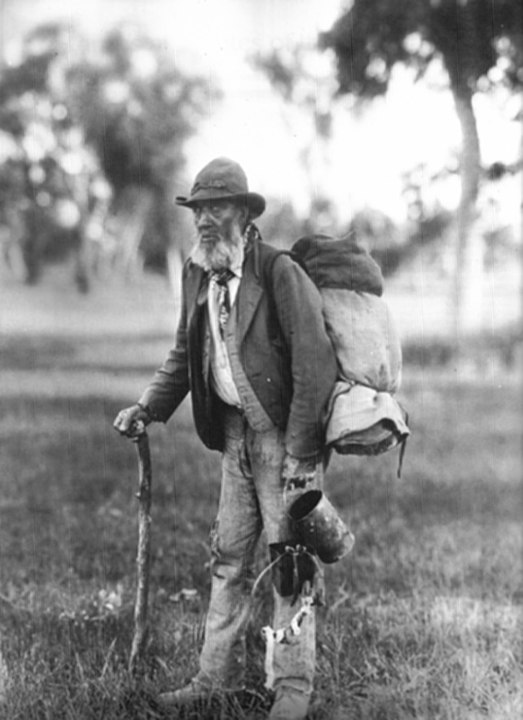
Australian poet Andrew Barton "Banjo" Paterson wrote the lyrics for "Waltzing Matilda" in August 1895 while staying at Dagworth Station, a sheep and cattle ranch owned by the Macpherson family in Australia.
The lyrics were inspired by a melody played on a zither by 31-year-old Christina Macpherson, a family member.
Christina had listened to the song "The Craigielee March" performed by a military band while attending obstacle races in April 1894, and played it by ear at Dagworth.
Paterson decided that the music would be a good piece of lyrics and between the two they produced the original version "Waltzing Matilda".
The score was first published in 1903.
The title of the song in Australian slang refers to waltzing with his belongings in a "matilda" (swag, tent) hanging on his back.
The song tells the story of a tramp who camps one night by a pond (billabong) while having tea. A sheep (jumbuck in Australian English) comes to drink water and the vagabond steals it to eat. The owner realizes this and calls three police officers to arrest him.
The vagabond, before being arrested for stealing the sheep, prefers to throw himself into the water and drown.
The song ends by telling that the ghost of the tramp is heard singing a song that invites travelers to dance with him, that is, to go out on the roads and travel on foot.
All the folklore surrounding the song and the process of its creation has spread its popularity to the point of having its own museum (the Waltzing Matilda Center) and being described as Australia's "unofficial national anthem".
Wikipedia extract & translation
File Attachments
Licensed under the Creative Commons Attribution Non-commercial Share Alike License 4.0