

Clefs are the symbols that you find right on one of the lines at the beginning of the stave
.
 TREBLE CLEF (high sounds)
  C CLEF (middle sounds)
  BASS CLEF (low sounds) The TREBLE CLEF is the most common clef. It tell us to play high notes.
It is used for higher-pitched melody instruments as flute, oboe, violin
or the right hand in the piano.
Music for soprano an alto voices is written on the treble clef, too.
The sign always goes in the 2nd line of the stave, indicates that this line is note G.
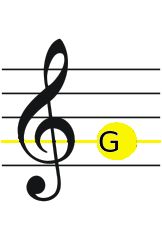 The BASS CLEF is used for lower-pitched instruments
like the tuba, trombone, basson, cello and double bass or the left hand in the piano. It's also used for bass voices. The sign goes in the 4th line of the staves, indicates that this line is note F .
Listen to note F
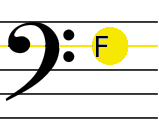
The Clef indicates the name and pitch of the notes on that line.
This line serves as a reference point by which the names of the notes
on any other line or space of the stave may be determined.
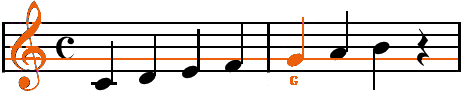
Listen to these scales: High sounds in Treble Clef and low sounds in Bass Clef
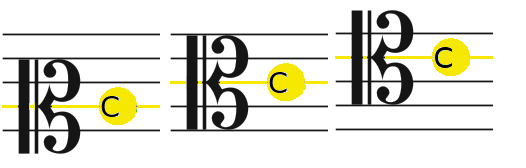
 The C CLEF can move up and down on the stave.
 The sign indicates always where is the note C, depending on the position of the clef on the stave.
Listen to note C
(that is, even though some sound much higher or lower than others).
This would be difficult to do with only one clef, because the stave has only five lines, and the number of pitches that can be represented on the stave, even with ledger lines,
is not nearly equal to the number of notes the orchestra can produce.
The use of different clefs for different instruments and voices allows each part to be written comfortably on the stave with a minimum of ledger lines.
