Read the text and then do the following exercises.
Many of us are accustomed to very traditional learning styles as a result of our experience as students. We can all remember listening to a teacher talk, and copying notes off the chalkboard. But we can all agree that people have different learning styles and preferences, and these can vary from subject to subject.
Learning styles are also called learning modalities. The four sensory modalities are:
- Visual learning
- Auditory learning
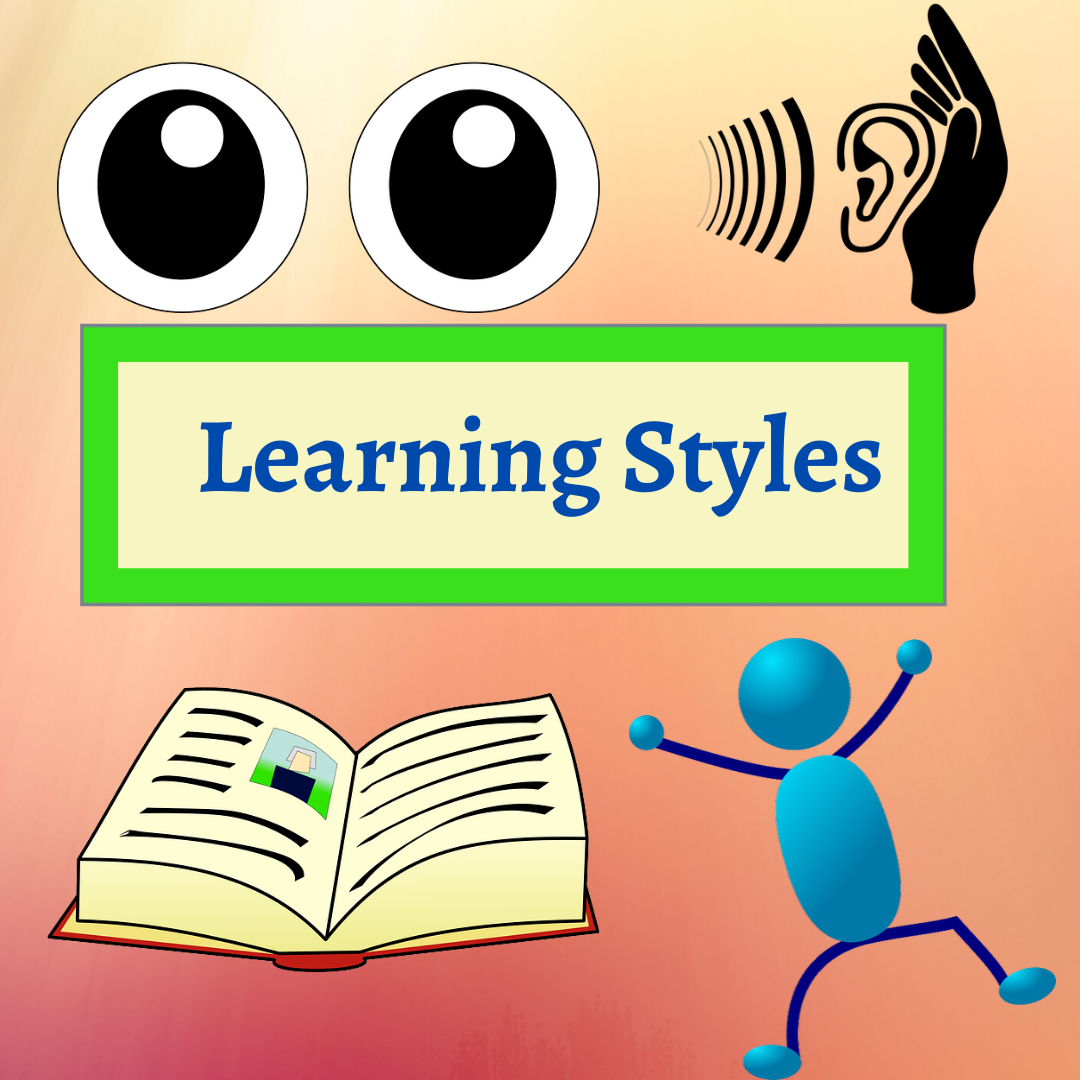
- Read/write learning
- Kinesthetic learning
Visual learners have a preference for seeing (visual aids that represent ideas using methods other than words, such as graphs, charts, diagrams, symbols, etc.). Auditory learners best learn through listening (lectures, discussions, CDs, etc.). Read/write learners have a preference for written words (readings, dictionaries, reference works, research, etc.) Tactile/kinesthetic learners prefer to learn via experience—moving, touching, and doing (active exploration of the world, science projects, experiments, etc.).
The VARK model can be a helpful way of thinking about different learning styles and preferences, but they are certainly not the last word on how people learn or prefer to learn. Many educators consider the distinctions useful, finding that students benefit from having access to a blend of learning approaches. Others find the idea of four “styles” to be distracting or limiting.
You’ll probably discover that instructors teach their course materials according to the method they think will be most effective for all students. Thus, regardless of your individual learning preference, you will probably be asked to engage in all types of learning. For instance, even though you consider yourself to be a “visual learner,” you will still probably have to write papers in some of your classes. Research suggests that it’s good for the brain to learn in new ways and that learning in different modalities can help learners become more well-rounded.
You might discover that you prefer more than one learning style. Applying more than one learning style is known as multimodal learning. This strategy is useful not only for students who prefer to combine learning styles but also for those who may not know which learning style works best for them. It’s also a good way to mix things up and keep learning fun.
Adapted from: https://courses.lumenlearning.com/waymaker-collegesuccess/chapter/text-learning-styles/