Reflection
Birth order refers to the order a child is born in their family. Many people think that it influences your personality, but there is no scientific evidence on this.
Birth order refers to the order a child is born in their family. Many people think that it influences your personality, but there is no scientific evidence on this.
Do you agree with this?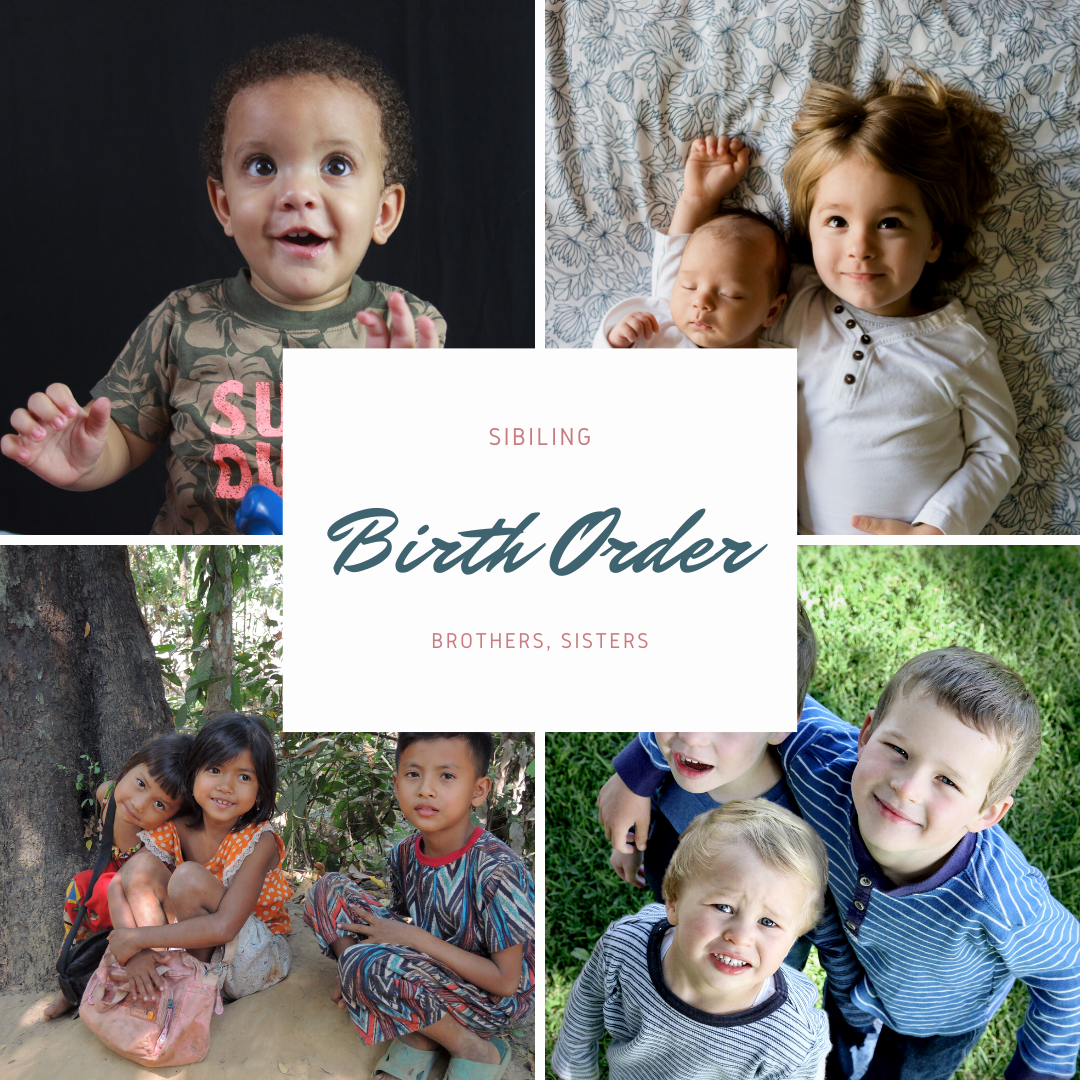
Only children can't share. First-borns are bossy. And the youngest child gets away with murder. We all know the stereotypes connecting personality with birth order, and no matter where you sit in your family tree, you are likely to have some assumptions about how your position in your family helped to shape your personality.
But is it true that your birth position can influence your personality and behaviour? We wanted to find out. So, we asked visitors taking our TypeFinder Personality Test to share their family history. Some 5,747 people generously responded, and we compared those responses with volunteers' personality types to see what trends, if any, we could find.
What do you think we found? Are first-borns really our natural leaders? Are sandwich kids as harmony-oriented and fairness-loving as we think they are? Do the babies of the family enjoy more independence than their older siblings—and the confidence that goes along with it?
Here’s what we discovered:
If you’re looking for a natural leader, look no further than your firstborn. Being the oldest translates into certain family responsibilities that require leadership skills from an early age. Parents tend to invest much more time in their first borns, and expect them to serve as role models to their younger siblings. As a result, parents describe their first-born children as:
Looking at this list of traits, we can predict that oldest children will favour fact-oriented personality traits: Thinking (in Myers and Briggs' theory, this indicates a person who makes decisions based on logic) and Judging (the desire to be organized and have decisions made).
Middle kids are in a bit of a difficult position. Unlike firstborns, they never had the parents to themselves, but they didn’t get to enjoy all the fuss and privileges of the youngest child either. They get the less favourable situation —and are perceived as being impatient to please and impress as a result. Here are some of the stereotypical traits we expect of middle children:
The prediction here is that middles would show high feeling preferences, making decisions based on compassion and what is important to people.
Although the youngest gets the “baby bonus” of parental attention, it’s not all easy for these kids. Parents tend to be less impressed by their accomplishments because they’ve “been there, done that” with older children. This means that youngest children are more willing to take risks than older kids, and they often develop “out there” ways to attract attention, such as being the family clown.
Other stereotypical youngest-child traits include:
What’s the personality prediction here? We believe that last-borns would be Extroverted and Perceiving for sure, and may show that they like living the moment and are future focused.
Overall, though, being the youngest child seemed to have the least impact on individual personality traits.
Only children occupy a special place. They enjoy the full attention of their parents for their entire lives, and do not have to share resources such as their parents' time or money with anyone. Not only do they get more attention than siblings, they typically have adults rather than friends their age to follow and learn from.
In terms of specific traits, onlies are expected to be:
The prediction, then, is for onlies to be thinkers like firstborns, but with less propensity for judging. In fact, we might speculate a preference for perceiving. Without siblings to boss around, onlies can afford to be a bit less structured than firstborns.
We did this analysis to see if there were any trends in birth order in relationship to personality type. We were curious to know whether there were certain types that were more likely to occur in a particular birth position, or if particular preferences were influenced by the family structure. What’s fascinating is that overall, the data suggests that what we assume about birth order and personality is mostly true—whether you're firstborn, middle child, last-born, or only child, birth order can have a big effect on your personality in all the ways that parents have observed.
Which leaves us with a final question: how do you think your birth order influenced your personality type?
Adapted and with permission to use from: Molly Owens, The Surprising Ways Your Birth Order Impacts your Personality Type. 2019
Write down the different adjectives that are used to describe first borns, middle kids, youngest children, and only children.
 Now that you have read and listened to the different characteristics, go to Padlet on Moodle and complete the chart with as many adjectives as you can.
Licensed under the Creative Commons Attribution Share Alike License 4.0