Going Green
Climate change impacts
Reading Comprehension: Global Warming
Here are four texts about Global Warming. Read them and choose a heading for each of them.
- What is Europe doing?
- What can humans do?
- Understaning climate change.
- What makes the climate change?
Click on the arrows to move along the texts.
Text 1
The Earth’s climate is influenced by many factors, mainly by the amount of energy coming from the sun, but also by factors such as the amount of greenhouse gases and aerosols in the atmosphere, and the properties of the Earth’s surface, which determine how much of this solar energy is retained or reflected back to space.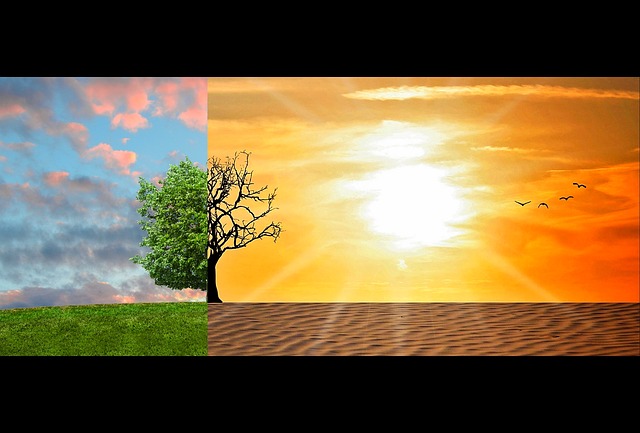
The atmospheric concentrations of greenhouse gases such as carbon dioxide (CO2), methane (CH4) and nitrous oxide (N2O) have significantly increased since the beginning of the industrial revolution. This is mainly due to human activities, such as the burning of fossil fuels, land use change, and agriculture. For instance, the atmospheric concentration of carbon dioxide is now far higher than in the last 650 000 years and has been growing faster in the last ten years than it has been since the beginning of continuous measurements around 1960.
It is very likely that, overall, human activities since 1750 have had a global warming effect on the Earth.
https://www.eea.europa.eu/themes/climate/faq/what-makes-climate-change
Text 2
Our climate is changing. Observed changes over the 20th century include increases in global average air and ocean temperature, rising global sea levels, long-term sustained widespread reduction of snow and ice cover, and changes in atmospheric and ocean circulation and regional weather patterns, which influence seasonal rainfall conditions.
These changes a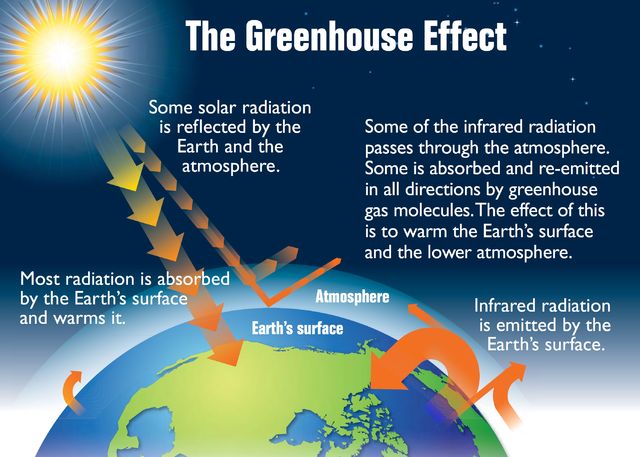 re caused by extra heat in the climate system due to the addition of greenhouse gases to the atmosphere. The additional greenhouse gases are primarily input by human activities such as the burning of fossil fuels (coal, oil, and natural gas), agriculture, and land clearing. These activities increase the amount of heat-trapping greenhouse gases in the atmosphere. The pattern of observed changes in the climate system is consistent with an increased greenhouse effect. Other climatic influences like volcanoes, the sun and natural variability cannot alone explain the timing and extent of the observed changes.
The science behind climate change is supported by extensive scientific research performed and reported across the world. Past and present climate information is collected from observations and measurements of our environment, including trapped air in ice from thousands of years ago. Climate models are used to understand the causes of climate change and to project changes into the future.
Many of the impacts of climate change pose risks to human and natural systems, in the form of more frequent and severe heat waves, coastal inundation due to sea level rise, disruptions to rainfall patterns and other effects. Analyses of a range of climate scenarios indicate the most severe risks of climate change can largely be mitigated if carbon dioxide emissions are reduced to the point where carbon dioxide is no longer accumulating in the atmosphere.
https://www.environment.gov.au/climate-change/climate-science-data/climate-science/understanding-climate-change
Text 3
Climate change will need to be dealt with by governments worldwide, through measures like the 2005 Kyoto Protocol. This brought nations together for the first time in a single agreement on fighting against climate change.
Everyone has a carbon footprint since the amount of greenhouse gases like carbon dioxide - which contributes to global warming - released into the atmosphere are caused by people's actions. This can be reduced in a number of ways. According to a recent report by a group of international scientists, transport is responsible for 34% of a household's carbon footprint in high-income countries like the UK. The report calls for a major programme of investment in the rail and bus network, with lower ticket prices and investment in safer cycling.
Home heating presents another challenge and opportunity. It is responsible for 21% of a household's carbon footprint. This could be cut by turning down the thermostat, having better-insulated houses and changing to low-carbon heating systems.
According to the United Nations, the current world population is about 7.7 billion and could reach 2more billion in 2050. This population growth increases demand for food, greater energy consumption and more competition for resources. And it increases the production of the gases that cause global warming, so may be human overpopulation is an important problem as well.
Text 4
The EEA report on greenhouse gas trends and projections analyses the actions (policies and measures) already taken or planned by EU Member States to reduce greenhouse gas emissions.
Domestic policies and measures take place within the national boundaries of the country and include:
- the promotion of electricity from renewable energy;

- improvements in energy efficiency;
- promotion of biofuels in transport;
- reduction of carbon dioxide emissions from cars;
- recovery of gases from landfills and reduction of fluorinated gases
- Text 1: What makes the climate change?
- Text 2: Understanding climate change
- Text 3: What can humans do?
- Text 4: What is Europe doing?
Reading Comprehension: True-False Activity
Read the texts again and decide if the following sentences are true or false.
Feedback
False
It also depends on the properties of the Earth surface apart from the sun and the greenhouse gases.
Feedback
False
The text mentions those greenhouse gases have significantly increased since the Industrial Revolution, but nothing it is mentioned about what happened before.
Feedback
True
Human beings' actions are the main cause for the increase of concentration of greenhouse gases.
Feedback
False
This is one of the reasons but there are more according to the text.
Feedback
True
According to the text: Climate models are used to understand the causes of climate change and to project changes into the future.
Feedback
True
According to the text: Analyses of a range of climate scenarios indicate the most severe risks of climate change can largely be mitigated if carbon dioxide emissions are reduced
Vocabulary Activity
Match the words below with their meanings from the text.
Licensed under the Creative Commons Attribution Share Alike License 4.0