Leaving the nest vs Empty-Nest Syndrome
|
Leaving the nest is an expression that means to move out of one's parents home for the first time, most typically to study at university. Parents usually feel proud and sad at the same time. |
Andrea Jones and her mom, Jane Jones, tell us their heartfelt story.
Andrea Jones:
When I was accepted at university to do my Computer Science degree, I felt what everyone feels: excited. I was excited about beginning a new part of my life. I was excited about taking the next big step and living on my own. Moving away is a big step. But, I've learned leaving home is, too.
The morning of my last day at my parents' house was met with excitement. We drank coffee at the kitchen table, we went over some of my future plans. I didn't realize I was actually moving until everything was packed in the car and we were ready to go.
Suddenly, I was in the upstairs bedroom, I put my arms around the dog´s neck, hugged him and said goodbye. I grabbed my bags and walked out the door, leaving behind my home.
I cried for two days straight, and I didn't even want to talk to my mom on the phone the first morning at university because my emotions were running too high. The place was wonderful, but, it didn't have my mom.
Living at home is about being surrounded by family 24/7. It's being taken care of if you're sick and having your mom insist on making you a bowl of chicken soup. It's about having someone there to help you when you need it.
But over time, things settle down, and your new life will become one you won't compare to the one living under your parents' roof. Although every big step we take can be like going into the unknown, we all have to do it sometime.
Adapted from: https://www.elitedaily.com/life/moving-out-parents-house/1300726
Jane Jones:
I don’t know about you, but seeing the return of back-to-school supplies in stores always makes me feel reflective. This time of year brings back memories of taking my daughter Andrea to university and crying while driving back home. I was leaving behind not just our daughter, but a time of life I’d loved so much.
That was twelve years ago. And, honestly, those feelings of sadness and loss–often called empty-nest syndrome–still come up now and then, especially after a holiday or family event when everyone gets together and then leaves once again.
The best advice I have for friends going through this time of life is to just let yourself feel all the feelings. It’s OK to cry. It’s the end of a chapter. However, at some point you have to allow the next chapter to begin.
Believe it or not, eventually you’ll find things will get better. While becoming an empty nester is a life-changing experience, it doesn’t have to make you depressed. Now’s the time to start doing all the things you set aside while you were raising your kids. After Andrea left home, I had a hard time remembering what I used to enjoy in those days before children! So, I made a list of things to do. Little by little, those were the things that helped me move past heartache when she left home.
Adapted from: https://jane-athome.com/empty-nest-what-to-do/
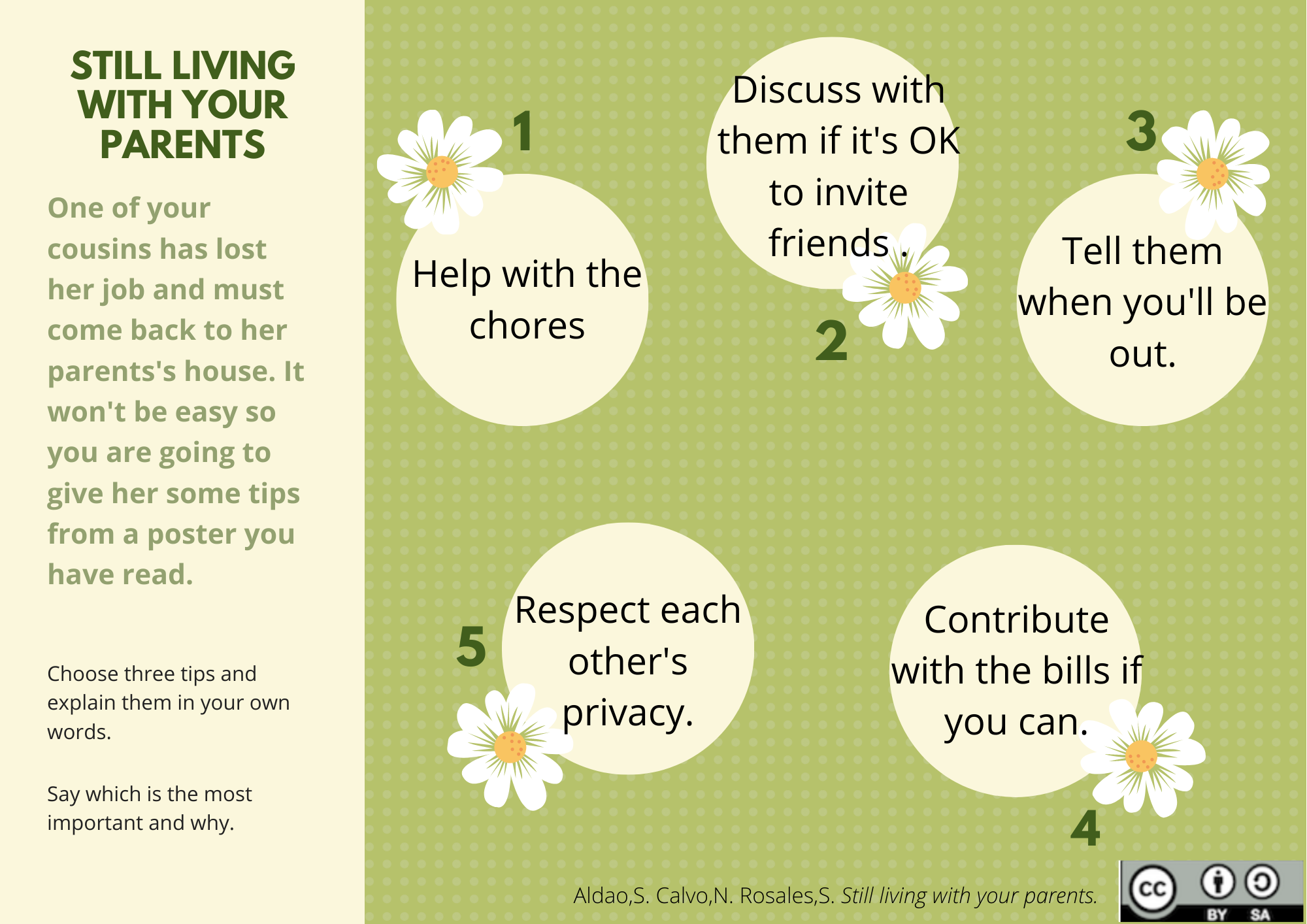
 Class activity: Read the information in this chart. It will be used in an oral activity in class. Later you will have to upload a recording on the "making progress" section on Moodle.