Future will
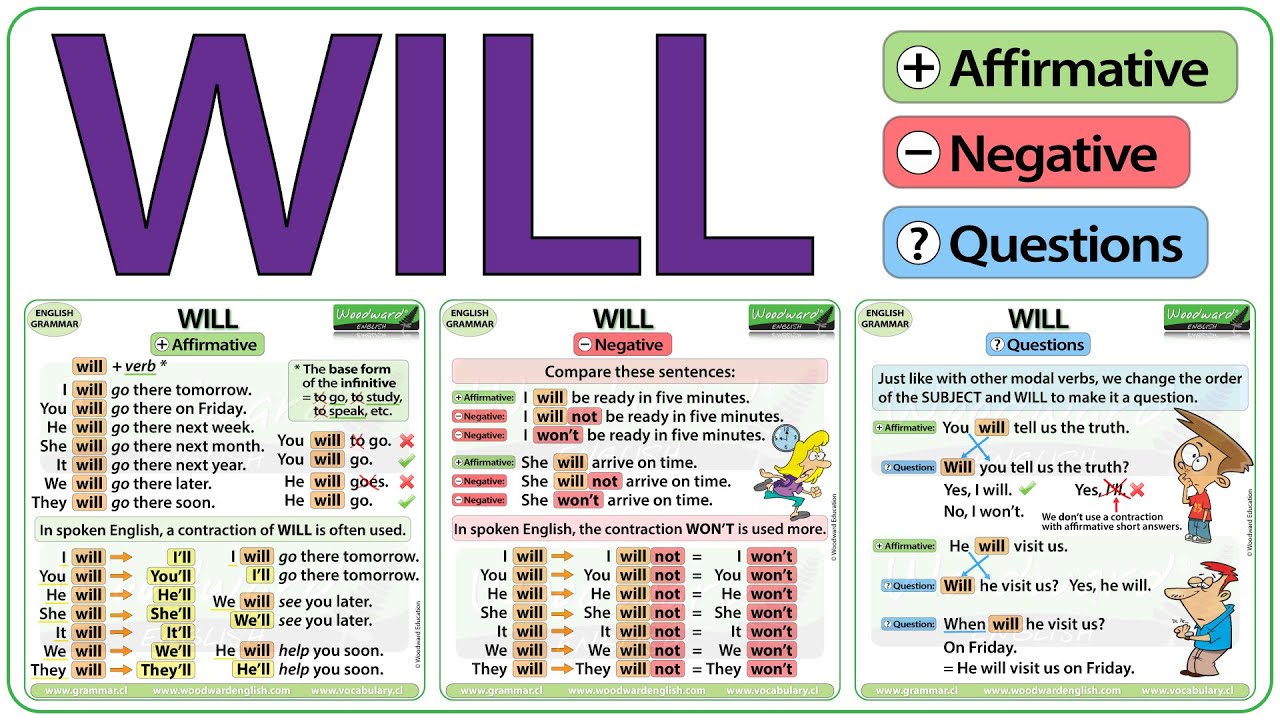
Using will
Here are some of the ways we use will:
1. To talk about the future
We can often use “will” + infinitive without “to” to refer to future events. This is often called the “pure” future:
“I’ll be back later tonight – don’t bother making me dinner.”
“I’m busy right now – I’ll call you tomorrow.”
2. To make predictions
We also use “will” to talk about what we think will happen in the future.
“I think it’ll rain tonight.”
“I’m sure he’ll be a successful lawyer one day.”
Note: for “negative” predictions, make the “think” negative, not the “will”:
“I don’t think it’ll rain tonight” (Not “I think it won’t rain tonight.”)
3. To make decisions
When we make decisions at the same time as we speak, we use “will”.
For example, in a restaurant:
Waiter: “What would you like to eat?”
Customer: “I think I’ll have the chicken.”
Other examples:
“I’m cold. I think I’ll put the heater on.”
“Look, that’s my bus. I’ll catch up with you later.”
4. To make promises, offers, requests and threats
These are some other ways we can use “will” in English.
Promises: “I’ll help you with your homework tomorrow.”
Offers: “I’ll look after the children for you if you like.”
Requests: “Will you tell Tony I called?”
Threats: “If you cheat again, I’ll tell the teacher.”