

|
|
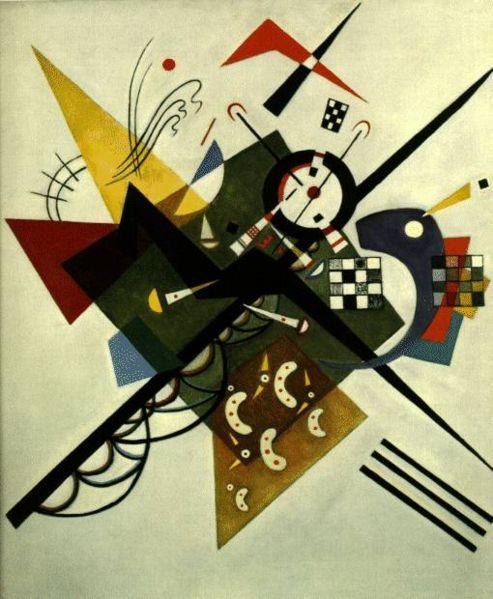 EXPRESSIONISM EXPRESSIONISM |
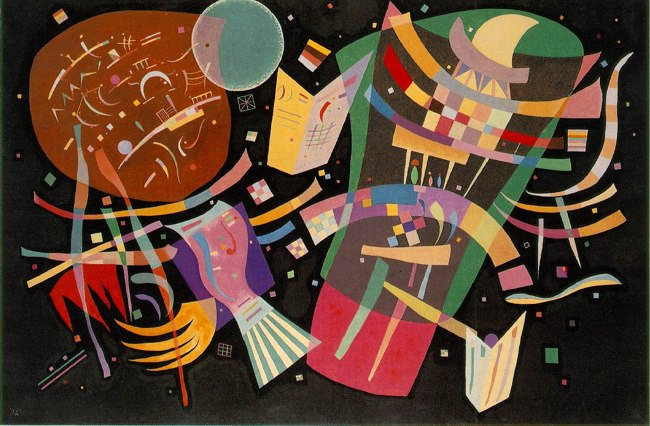 The term Expressionism was probably first applied to music in 1918, especially to Arnold Schoenberg, because like the painter Wassily Kandinsky he avoided traditional forms of beauty to convey powerful feelings in his music. The term Expressionism was probably first applied to music in 1918, especially to Arnold Schoenberg, because like the painter Wassily Kandinsky he avoided traditional forms of beauty to convey powerful feelings in his music.Expressionist music eliminate all of traditional music's conventional elements. SERIALISM
In music, Serialism is a method or technique of composition that uses a series of values to manipulate different musical elements. Serialism began primarily with Arnold Schoenberg's twelve-tone technique, though his contemporaries were also working to establish serialism as one example of post-tonal thinking (Atonality). Other types of serialism also work with sets, collections of objects, but not necessarily with fixed-order series, and extend the technique to other musical dimensions (often called "parameters"), such as duration, dynamics, and timbre. TWELVE-TONE TECHNIQUE
|
Twelve-tone technique (also known as dodecaphony, twelve-tone serialism), is a method of m usical composition devised by Austrian composer Arnold Schoenberg. usical composition devised by Austrian composer Arnold Schoenberg. The technique is a means of ensuring that all 12 notes of the chromatic scale are sounded as often as one another in a piece of music. All 12 notes are thus given more or less equal importance, and the music avoids being in a key. The technique was influential on composers in the mid-20th century. |
ARNOLD SCHOENBERG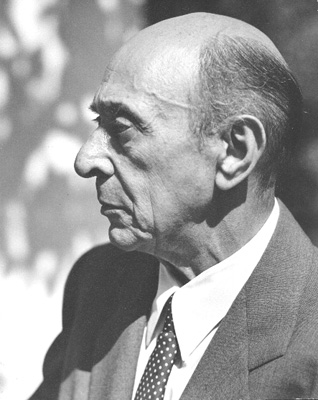 |
ANTON WEBERN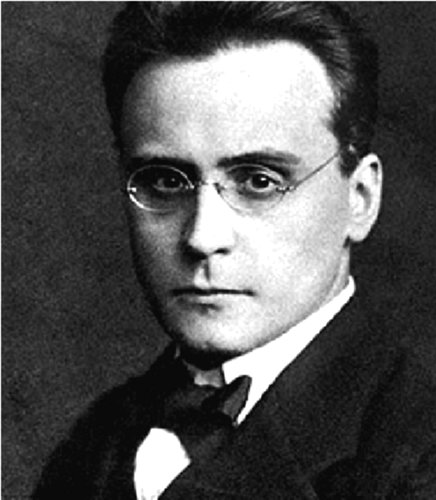 |
ALBAN BERG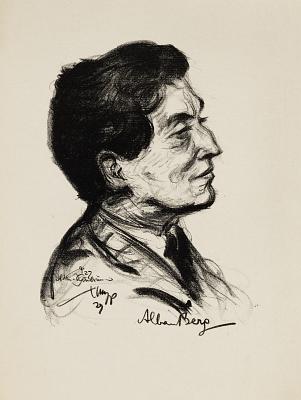 |
| * J. Haydn, W.A. Mozart & L.v.Beethoven were the First Viennese School in the Classicism. |
