

|
|
 MUSICAL FORMS MUSICAL FORMS |
VOCAL MUSIC |
OPERA
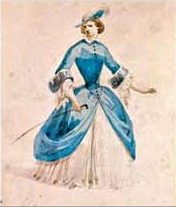 |
Opera tended to relax, break or mixed together, the procedures established in the Baroque and Classicism. This process reached its apogee with the operas of Wagner, in which arias, choruses, recitatives and ensemble pieces are difficult to distinguish. Other changes also occurred. The castrati disappeared and therefore the most heroic tenor roles acquired , and the chorus became more important. At the end of the Romantic period, verismo became popular in Italy, portraying realistic scenes in the opera , rather than historical or mythological. Many composers of Romanticism, wrote nationalist music, who had some particular connection with their country. This is manifested in various ways in the opera. |
LIED
|
Lied is a German word literally meaning "song".
It usually describes the setting of romantic German poems to music.The
poetry forming the basis for Lieder often centers upon pastoral themes,
or themes of romantic love. Typically, Lieder are arranged for a single singer and piano, the Lied with orchestral accompaniment being a later development. Some of the most famous examples of Lieder are Schubert's works. |
|
INSTRUMENTAL MUSIC |
PIANO MUSIC
 |
- PRELUDE: Short composition written for a virtuosity piano. - BAGATELLE: Short piece of music, typically for the piano, and usually of a light, mellow character. The name bagatelle literally means a "a short unpretentious instrumental composition" as a reference to the light style of a piece - ÉTUDE: Short piece of music where the musical theme is becoming increasingly difficult and designed to provide practice material for perfecting a particular musical skill. The tradition of writing études emerged in the early 19th century with the rapidly growing popularity of the piano. Of the vast number of études from that era some are still used as teaching material, and a few, by major composers such as Frédéric Chopin or Franz Liszt achieved a place in today's concert repertory. - IMPROMPTU: Work without any rules and in which the performer is free to improvise. - NOCTURNE: Composition inspired by the night, with sentimental character, a delicate and expressive melodic line. |
PROGRAM MUSIC
|
Program music is a type of art music that attempts to musically render an extra-musical narrative. The narrative itself might be offered to the audience in the form of program notes, inviting imaginative correlations with the music. - SYMPHONIC POEM: Piece of orchestral music in a single continuous section (one movement) in which the content of a poem, a story or novel, a painting, a landscape or another (non-musical) source is illustrated or evoked. |
|
SYMPHONY
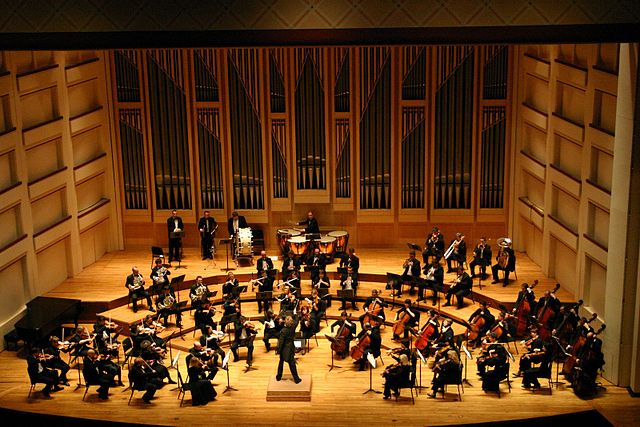 |
With the rise of established professional orchestras, the symphony assumed a more prominent place in concert life. Beethoven dramatically expanded the symphony. His Symphony No. 5 is arguably the most famous symphony ever written. His Symphony No. 6 is a programmatic work, featuring instrumental imitations of bird calls and a storm, and a convention-defying fifth movement. His Symphony No. 9 takes the unprecedented step (for a symphony) of including parts for vocal soloists and choir in the last movement, making it a choral symphony. Berlioz's Symphonie fantastique, a work famous for its innovative orchestration is also a programme work. |
