

|
|
 MUSIC STYLE MUSIC STYLE |
| Classicism is the
European music style developed between 1750 and 1820 by composers such
as Wolfgang Amadeus Mozart and Joseph Haydn. It coincides with the cultural and artistic era now called, in architecture, literature and other arts, Neoclassicism. 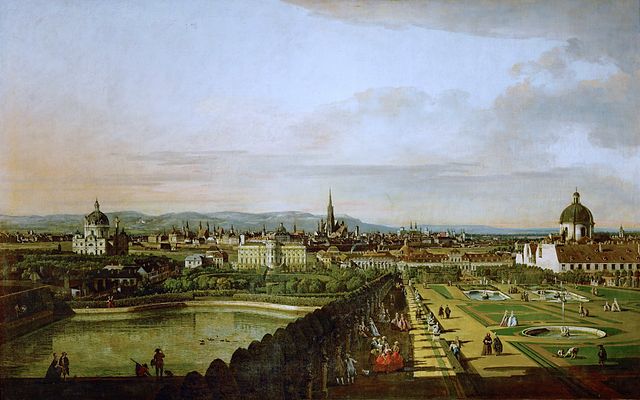 It had its large distribution centers in Berlin, Paris, Mannheim, and, especially, Vienna.
The Eighteenth century was the Age of the Enlightenment, and its style moved aesthetic musical taste for the natural, balanced and clear; rejection of artifice and excess sophistication of baroque music; imitation of nature, in the form of simple structures and symmetrical phrases similar to those of folk music, in opera and close integration of drama and music. 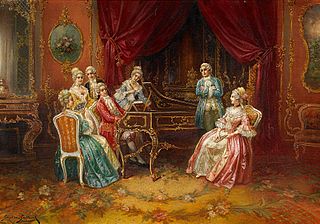 A symphony is an extended musical composition in Western classical music, generally scored for orchestra. A symphony is an extended musical composition in Western classical music, generally scored for orchestra.Besides the classical music audience ranged from the old aristocracy to the bourgeoisie who massively bought editions of scores and filled the opera houses and concert, which prompted the composer to bring his style to the popular. The dissemination of music grew and became international, and with it the reputation of the most prominent composers, so the style is unified throughout Europe and known authors made frequent tours of the main cities of the continent. MAIN CHARACTERISTICS
- Accompanied melody texture, consisting of the predominance of higher voice, which focuses the interest in its melody. The accompaniment is now written explicitly ( disused of basso continuo ). - Symmetrical and short melodies, with structured phrases with antecedent and consequent (or question and answer), which typically are closed in dominant and tonic harmonies, respectively. - Very clear harmonies, based on the tonic chords, dominant and subdominant, that structure and shape musical phrases with clear cadences. More music was wrote in major mode than in minor mode. - Rhythm was very clear and governed by harmony. - As a solo instrument, the harpsichord was replaced by the piano (or fortepiano). - The orchestra and its dynamics were expanded. - Standardized forms were clearly defined shapes and structures that Western music uses today: the sonata, the symphony and classical concert.  |