

|
|
 BAROQUE MUSIC STYLE BAROQUE MUSIC STYLE |
|
GENERAL CHARACTERISTICS
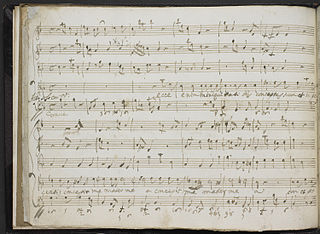
The main common characteristics of the Baroque music are:- The importance of the extreme voices (soprano and bass, called basso continuo). This texture is often called accompanied melody. 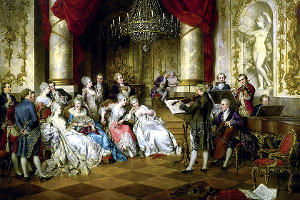 - The obligatory presence of the basso continuo: the lower melodic line (bass) was written with the harmony of the upper voices. The basso continuo was played regularly by one or more low melodic instruments (cello, viola da gamba, bassoon ...) plus a harmonic instrument improvising chords (harpsichord, lute, harp ...). - The development of tonal harmony. The movement of melodic voices came from the basso continuo chord progression. The harmonic rhythm was fast (chords change frequently) . - Clear and simple rhythm (binary or ternary) , very uniform , even mechanical . - The development of a musical language for instruments, different from the vocal musical language. - The orchestra was born in opera houses, dominated by string instruments.  - New vocal forms: opera, oratorio and cantata. - New instrumental forms: concert, sonata and suite. - Sound contrasts ( between choirs , including instrumental families or between soloist and orchestra), materialized in the " concert style " as opposed to the uniformity of textures and timbres common in the Renaissance. - Improvisation, both in free works and in already written pieces like ornamentation.  PERIODS AND EVOLUTION
1.- Early Baroque Music (1580–1630) At the end of the sixteenth century the imitative polyphony of the Renaissance died and two new forms of composition born: - Polychorality:various vocal or instrumental groups located in different places were alternated. (Venetian school). The concert style derives from polychorality. - Accompanied melody (or monody): the musical interest is in the highest voice, accompanied by the harmony of the basso continuo (Florentine Camerata). In this context opera music born. 2.- Middle Baroque Music (1630–1680) 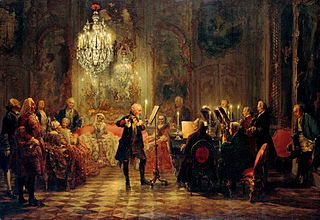 Concert style and accompanied melody spread throughout Europe with opera and Italian music. 3.- Late Baroque Music (1680–1730) - Full adoption of tonal harmony. - The concert style extension, applied to opera and instrumental music: ritornellos (refrains), contrasts between tutti and solo, rhythmic basses, unison passages, homophony governed by basso continuo ... 4.- Transition to the Classical Era (1730–1750) There were several trends: - Gallant style (France) - Opera buffa (Italy) - Sonata and symphony - Sentimental style (Germany) They make a sort of Pre-Classicism. |