
 FACTS IN THE RENAISSANCE FACTS IN THE RENAISSANCE |
| The Renaissance was a cultural movement that affected European intellectual life in the early modern period. The developments which define the Early Modern period were: - The rise of humanistic thought - The recovery of the literary and artistic heritage of ancient Greece and Rome - Increased innovation and discovery - The growth of commercial enterprise - The rise of a bourgeois class - The Protestant Reformation. 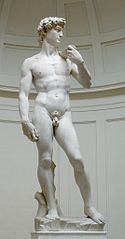 Beginning in Italy (its birthplace was Florence), and spreading to the rest of Europe by the 16th century, Renaissance influence was felt in literature, philosophy, art, music, politics,
science, religion, and other aspects of intellectual inquiry. Beginning in Italy (its birthplace was Florence), and spreading to the rest of Europe by the 16th century, Renaissance influence was felt in literature, philosophy, art, music, politics,
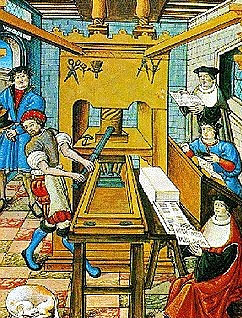
science, religion, and other aspects of intellectual inquiry.Renaissance scholars employed the humanist method in study, and searched for realism and human emotion in art. During the Renaissance, money and art went hand in hand. Artists depended totally on patrons while the patrons needed money to sustain geniuses. The rediscovery of ancient Greeks and Roman texts and the invention of printing democratized learning and allowed a faster propagation of ideas. 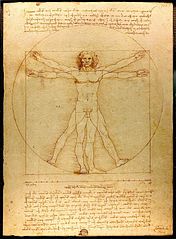 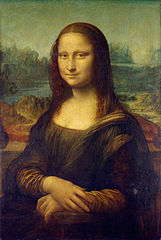 Science and art were very much intermingled in the early Renaissance, with polymath artists such as Leonardo da Vinci making observational drawings of anatomy and nature. Science and art were very much intermingled in the early Renaissance, with polymath artists such as Leonardo da Vinci making observational drawings of anatomy and nature. In 1492 the "discovery" of the "New World" by Christopher Columbus challenged the classical world-view. The Renaissance saw significant changes in the way the universe was viewed and the methods sought to explain natural phenomena.The famous thesis of Copernicus's book was that the Earth moved around the Sun. Significant scientific advances were made during this time by Galileo Galilei and others scientists. One important development was not any specific discovery, but rather the further development of the process for discovery, the scientific method.  |