
 |
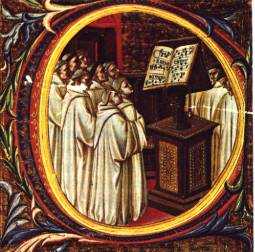 RELIGIOUS MUSIC: RELIGIOUS MUSIC: GREGORIAN CHANT |
| In the Middle Ages religious music was vocal and monodic music, because the Church did not allow the use of instruments (considered pagan). There were different liturgies and songs, highlighting the Gallican, Ambrosian, Mozarabic and Byzantine. 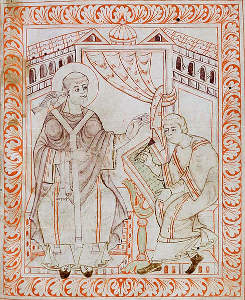 Pope Gregory I (540-604 AD) decided to unify the different schools and liturgical chants, in order to avoid any kind of heresy within the Church. He collected and arranged the tunes that Christians had been singing for centuries (until then dispersed) and soon became the "official chant of the Roman Church." The main characteristics of Gregorian Chant are: ✔ Music linked with a religious text (a liturgical chant) 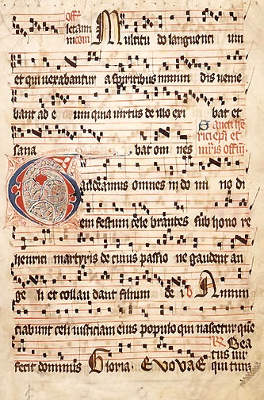 ✔ Melodies with few sounds (normal range of an octave) ✔ Monodic music or singing with one voice. This is a single melody sung by one or several people with the same rhythm and pitch. ✔ Free rhythm based on the text, which is in Latin. ✔ Music sung by male voices (specialized chanting monks) and a capella (without instrumental accompaniment). |