

|
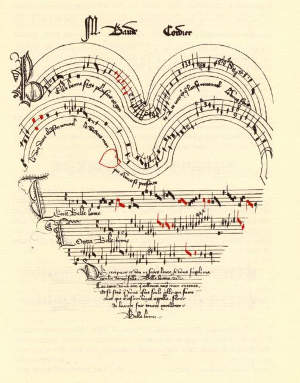 BIRTH OF POLYPHONY BIRTH OF POLYPHONY |
| In the IX Century Polyphony,
the singing of many voices that sound simultaneously, started.This
creation was one of the most significant events in the entire history
of music. The two basic types of polyphony in the Middle Ages were the organum and discantus. ORGANUM ( IX-X Centuries )
Organum was a form of early Western polyphony, which peaked at the School of NotreDame in Paris, and the center of the Ars Antiqua (especially between the eleventh and twelfth centuries). 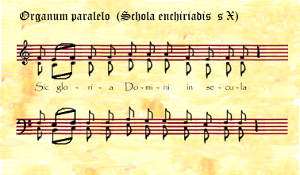 In Western music of the Middle Ages, the Organum was a genre of religious music, intended to improve the interpretation of a passage parallel by adding a second voice. It was based on parallel repetition of the same melody, note for note, but usually at a distance of four or five notes. The Gregorian chant is the vox principalis, the second voice is the vox organalis. DISCANTUS ( XI Century)
Discantus referred to the voices that followed contrary movement.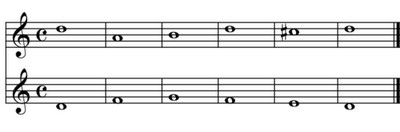 In the thirteenth century, many polyphonic (various voices) songs were performed in the cathedral of Notre Dame. Leonin and Perotin were two composers in this style, and there was a large number of artists who have remained anonymous. At this time, the number of voices involved in singing were increased, as well as those becoming more independent. One of the most important musical forms was conductus, where the composer composed all the voices (the vox principalis was not from the Gregorian chant, but was composed as the others). 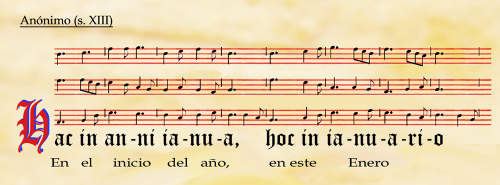 There were also other more developed polyphonic forms, like the motet, where different voices have different text. The earliest motets were composed in Latin, but since the middle of the XIII century French was used. The most important musical centers of this movement were: – Abbey of St. Martial (Limoges) – Notre Dame Cathedral (Paris) – Santiago de Compostela Cathedral with the Codex Calixtinus. 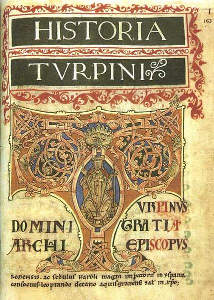 The Codex Calixtinus was very important musically speaking because it included the oldest three-voice polyphonic score from the XII century. It consisted of five books and two appendices. Book V was a kind of "Pilgrim's Guide to Santiago", featuring places to be visited along the route and warn the travelers of the dangers that would be o 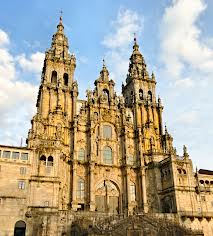 n nthe road. It described the city of Santiago and its cathedral in great detail. Appendix I contained sheet music, 22 compositions written for 2 voices and a hymn for 3 voices. In Appendix II there was the Anthem of the pilgrims: Dum pater familias. The book was stolen from its security case in the cathedral ́s archives on 3 July 2011 and appeared in 2012. Ars Nova is the title of a book which proposed new compositional techniques of the time. Thus arose the name of this new musical style, born in the XIV century and it aimed to break all previous music, tradition and rules (Ars Antiqua), consistent with the Gothic spirit of the time. 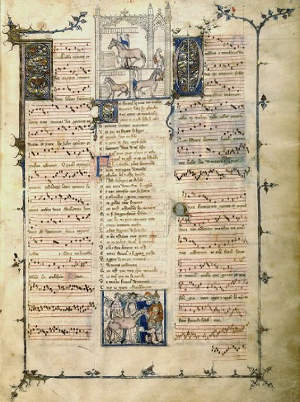 ✔ The motet was the main music form, with a developed rhythm. ✔ The music was composed to be enjoyed and not exclusively for a specific purpose ✔ The composer had more freedom and was no longer anonymous. ✔ It increased the compositions of secular music (instrumental music, dance ...) Guillaume de Machaut was one of the most important composers of the period who implemented new polyphonic techniques. The most important document of the Spanish Ars Nova was the Llivre Vermell in the Monastery of Montserrat (Barcelona), which collected songs and dances of pilgrims.  |