
 MUSIC IN ANCIENT ROME MUSIC IN ANCIENT ROME |
| The music of ancient Rome was a part of Roman culture from earliest times. Romans enjoyed music greatly and used it for many activities : the military uses of the tuba for signaling, as well as music for funerals, private gatherings, public performances on the stage and large gladiatorial spectacles. Music was also used in religious ceremonies. Song (carmen, plural carmina) was an integral part of almost every social occasion. The Romans cultivated music as a sign of education.  Music contests were quite common and attracted a wide range of competition, including Nero himself, who performed widely as an amateur and once traveled to Greece to compete. There are also numerous references to the pervasive presence of music in ancient Rome, music even on a very large scale (hundreds of trumpeters and pipers playing together at massive games and festivals) and even of normally hand-held citharas built as large as carriages. Under the influence of ancient Greek theory, music was thought to reflect the orderliness of the cosmos, and was associated particularly with mathematics and knowledge. 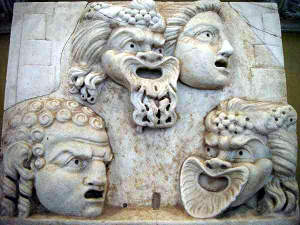 Music accompanied spectacles and events in the arena, and was part of the performing arts form called Pantomimus (an early form of story ballet that combined expressive dancing, instrumental music and a sung libretto). |