
 FACTS IN ANCIENT EGYPT FACTS IN ANCIENT EGYPT |
|
Ancient Egypt was an ancient civilization of Northeastern Africa,
concentrated along the lower reaches of the Nile River in what is now the modern country of Egypt.
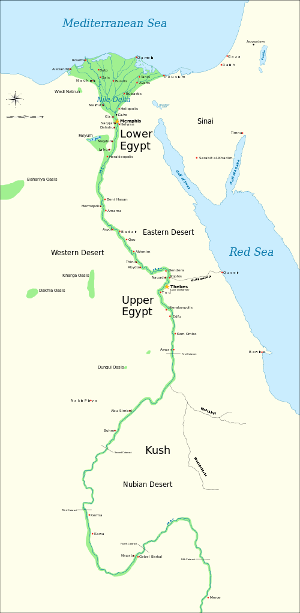 Its history occurred in a series of stable Kingdoms along the Bronze Age: - Old Kingdom (when the Egyptians built the Pyramids as tombs for their pharaohs), - Middle Kingdom - New Kingdom 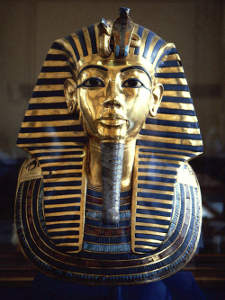 Then Egypt was part of the Persian Empire. The Egyptians didn't like being part of the Persian Empire, but they weren't strong enough to break away. When Alexander the Great conquered the Persian Empire in 332 BC, he also took over Egypt at the same time, and so Alexander's Greek successors ruled Egypt after that (332-30 BC). It was the Hellenistic time, the time of Cleopatra, who was a Greek woman and also pharaoh in Egypt. After Cleopatra died, the Romans conquered Egypt and it became part of the Roman Empire for hundreds of years (30 BC-700 AD). Finally about 660 AD, it was conquered and made part of the Islamic Empire which replaced the Roman Empire. The success of this civilization came partly from its ability to adapt to the conditions of the Nile River Valley. 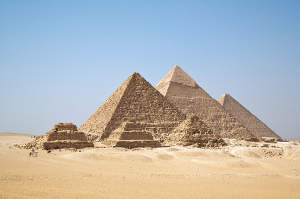 The many achievements of the ancient Egyptians include the quarrying, surveying and construction techniques that facilitated the building of monumental pyramids, temples, and obelisks; a system of mathematics, a practical and effective system of medicine, irrigation systems and agricultural production techniques, the first known ships, new forms of literature... Egypt left a lasting legacy. Its art and architecture were widely copied, and its antiquities carried off to far corners of the world. Its monumental ruins have inspired the imaginations of travellers and writers for centuries. |