The dissolution of the Soviet Union
Once Leonid Brezhnev died in 1982 he was succeeded by two leaders, who died shortly after getting the charge: Yuri Andropov and Konstantin Chernenko.
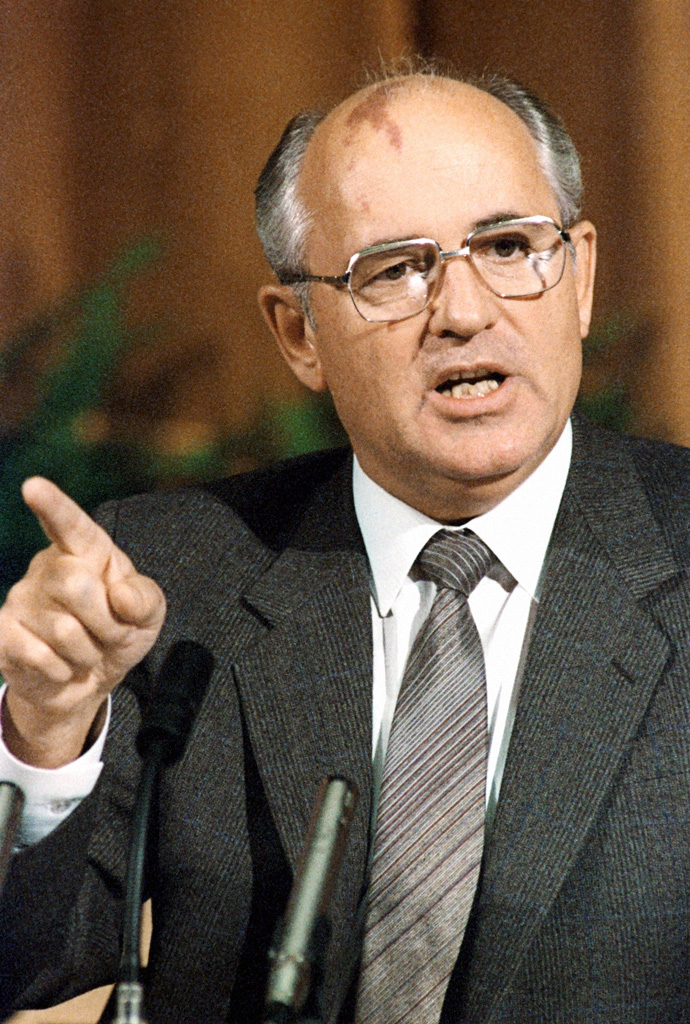
The new Soviet leader was elected in 1985: Mikhail Gorbachev. He implemented some measures in order to open up the political panorama and to put and end the economic and political crisis:
- Perestroika (Reconstruction). It was a group of reforms that included the legalisation of political parties, free elections, economic reforms, and the creation of private companies. Hence, the State intervention was reduced.
- Glasnost (Openness). It meant to get transparency in politics and allowed freedom of speech, opinion, and press
The conservative communists showed a big opposition against these reforms, since they thought they would involve the end of communism. However, these measures failed to improve the social and economic situation. Gorbachev implemented more measures in 1991 to decentralise the State, which met the radical opposition of the army. A coup d’état was staged in August 1991 and Gorbachev was isolated in his Crimean house. The president of the Russian Republic, Boris Yeltsin, promoted the popular resistance against the coup d’état, which eventually failed.
From that moment onwards reforms accelerated across the USSR and the Communist Party was banned. The Soviet Republics proclaimed their independence from the USSR. The Warsaw Pact was also dissolved in 1991. The difficult transition to democracy and capitalist economy began in the former USSR and in East Europe.