Foundations
Franco became the ruler of Spain after the Civil War (1936-1939):However, Franco had already concentrated powers within the rebel side during the war:
- He was appointed Generalísimo de los Ejércitos (Supreme General of the Armies) in September 1936.
- He was also appointed as Head of the State and the Government on 1 October 1936.
- Franco was also the only leader of Falange Española y de las JONS.
Francoism rejected the national sovereignty and representative democracy:
-
- There was not any political or trade union freedom.
- There was an official Trade Union: Sindicato Vertical, whose members were workers and employers.
Francoist ideology was known as Movimiento Nacional, whose main principles were:
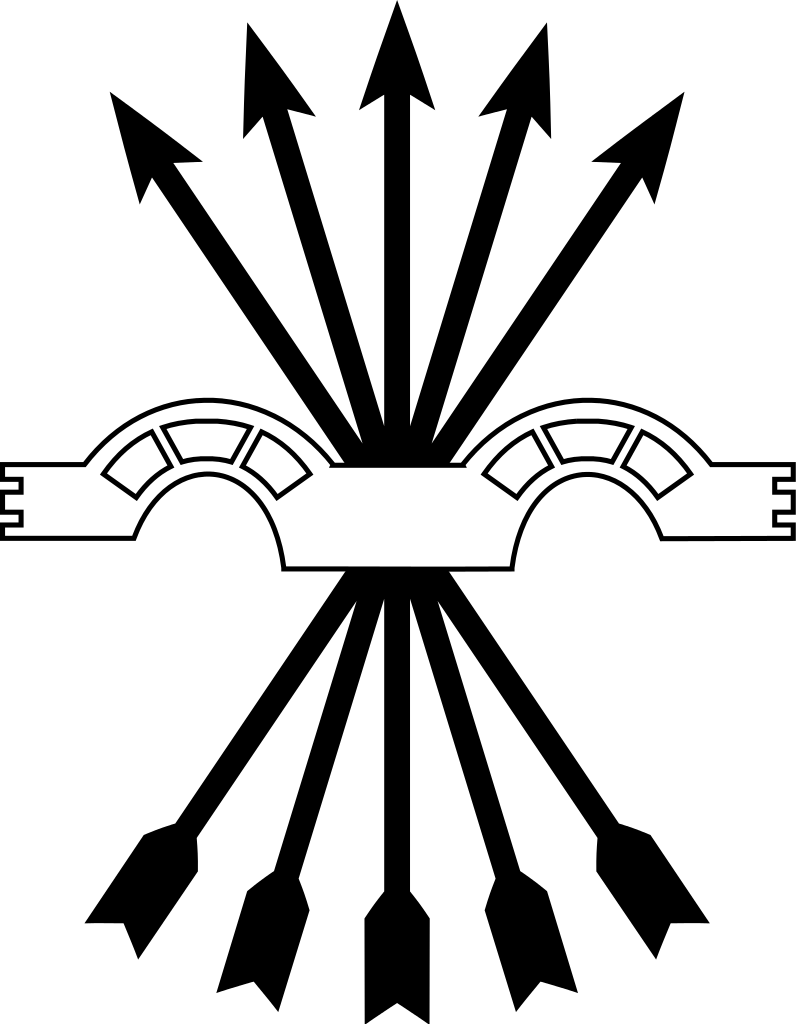
Fascism:
-
- Falange was conceived as a Fascist party whose main leader was Franco.
- Franco was given the title of Caudillo.
- Fascist symbols were adopted, such as the salute, paramilitary uniforms, or the emblem of the yoke and the arrows.
Nationalism and centralism:
-
- The statutes of autonomy were abolished as well as other languages or flags other than the Spanish.
- There were military parades, hymns, and exaltation of the national flag.
National-Catholicism:
-
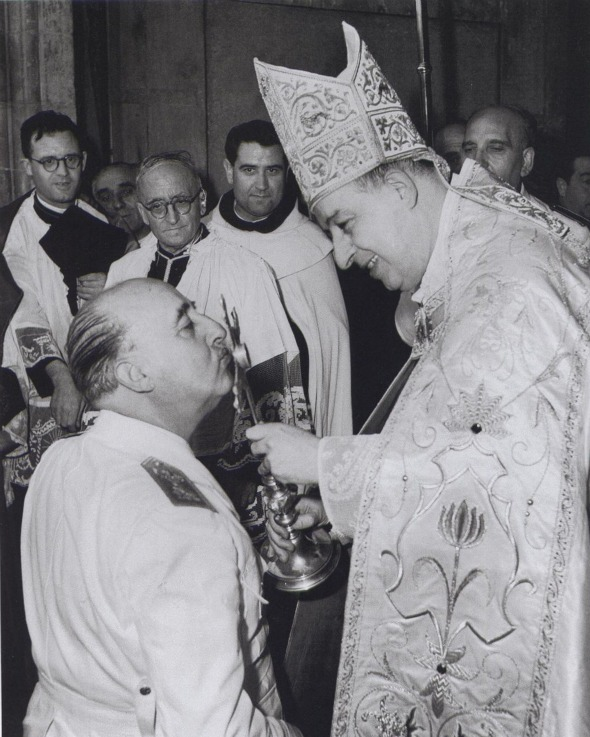
- Francoism was legitimised by the Catholic Church since the Civil War was considered a crusade against Marxist atheism.
- Catholicism was the official religion of Spain.
Traditionalism:
-
- The Habsburg Imperial Spain was the model Franco followed.
- Liberalism and enlightenment were blamed for the decline of Spain.
Franco had some supporters within Spain:
- The Army, the Catholic Church, and Falange. Initially the monarchists also supported Franco since they thought that monarchy would be re-established.
- Landowners, businessmen and bankers also supported Franco. Little by little the middle class also accepted his regime since they preferred a better standard of living.