The war in Asia
It began later than in Europe. Japan was a major and growing industrial power. Japan controlled Korea (1905) and Manchuria (1931). Japan signed a treaty with Hitler (1936) and started the invasion of China (1937).
Japan continued its expansion and by 1941 it controlled large parts of Eastern China. They wanted to invade the French colony of Indo–China because the Japanese needed supplies such as coal, rubber, oil and other raw materials.
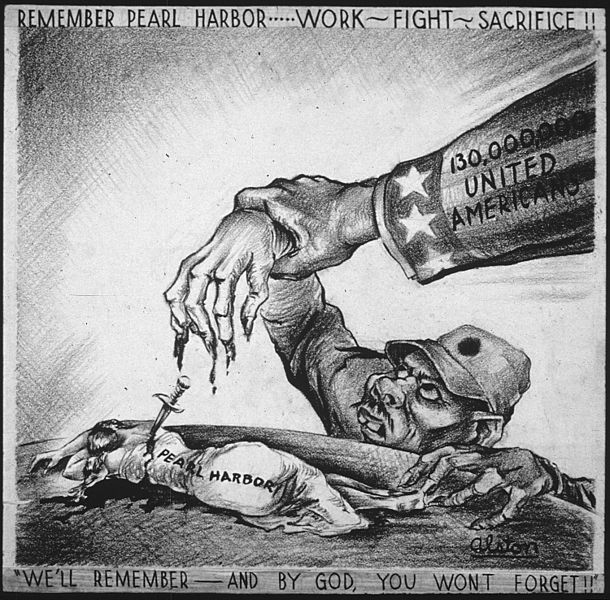
The USA, worried by the Japanese expansion, had banned trade with Japan. This embargo deprived Japan of 80% of its oil supplies (1941). A Japanese surprise attack against the USA would allow the conquest of South East Asia and the Pacific before the USA had recovered. This was the reason for the attack on Pearl Harbour, the big US Naval Base in Hawaii (7th December 1941), ordered by the Japanese commander General Tojo. The results of this were:
-
Over 2,400 men were killed and many more were injured.
-
The battleships were sunk but the aircraft carriers were at sea so the attack missed the main fuel supplies of the base.
-
Immediately after the attack, the USA (Roosevelt) and Britain (Churchill) declared war on Japan.
-
Germany declared war on the USA in support of Japan.
Within months Japan occupied large areas of the Philippines, the Dutch East Indies, Singapore, Malaya and parts of Burma. The main factors of these success were: surprise attacks, good equipment, well-trained pilots and a very large army and navy.
The turning point of the war was the Battle of Midway: the US sunk all four Japanese aircraft carriers (June 1942) and shot down 300 planes. Japanese naval supremacy in the region ended. Australian forces defeated the Japanese in New Guinea.

- During the battle of Iwo Jima the Japanese fought to the last man.
- Kamikaze pilots trained to die with honour, flew suicide missions in explosive-filled planes to destroy as many allied targets as they could.
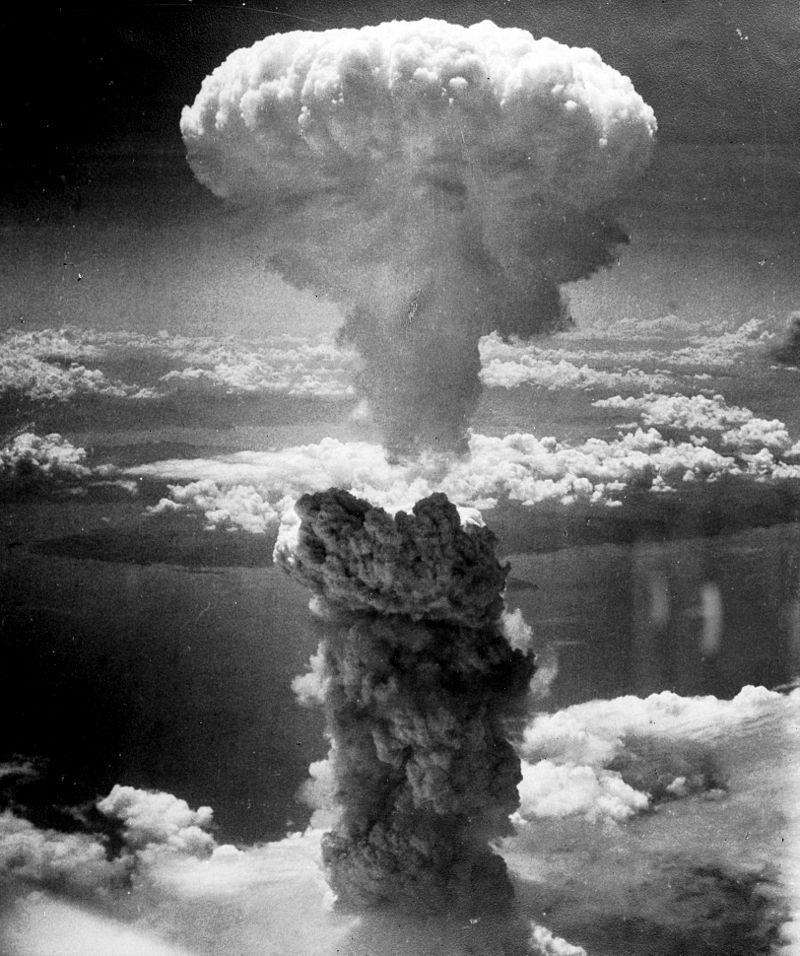
The new US president, Truman, had a choice between invading Japan and suffering huge losses of soldiers, or using a new secret weapon, the atomic bomb, to try to end the war. Two atomic bombs were dropped in August 1945: the first one on Hiroshima (6 – August) that killed 70,000 people; the second one on Nagasaki (8 – August) killed 36,000. The radiation killed a lot of people and it continued to kill them right through the twentieth century when many deformed babies were born.
On the 14th of August 1945 Japan surrendered unconditionally. The Second World War was over