The coup d´état and the division of Spain
The army rebelled in the Peninsula on the 18th July 1936. The coup was accepted by the church and followed by part of the army, carlistas political parties, monarchists, conservatives and falanxistas, these called themselves Nationalists. The coup divided Spain in two parts. Nationalists controlled most part of both Castelas, Galicia, Cáceres, part of western Andalucía, Navarra, Baleares (except Menorca) and the Canary Islands.
To organize themselves, they founded the “Xunta de Defensa Nacional” in Burgos. A few mouths latter Franco was named the leader of the government and all political forces formed one political party: “Falanxe Española Tradicionalista e das Xuntas de Ofensiva Nacional Sindicalista (FET e das XONS)”
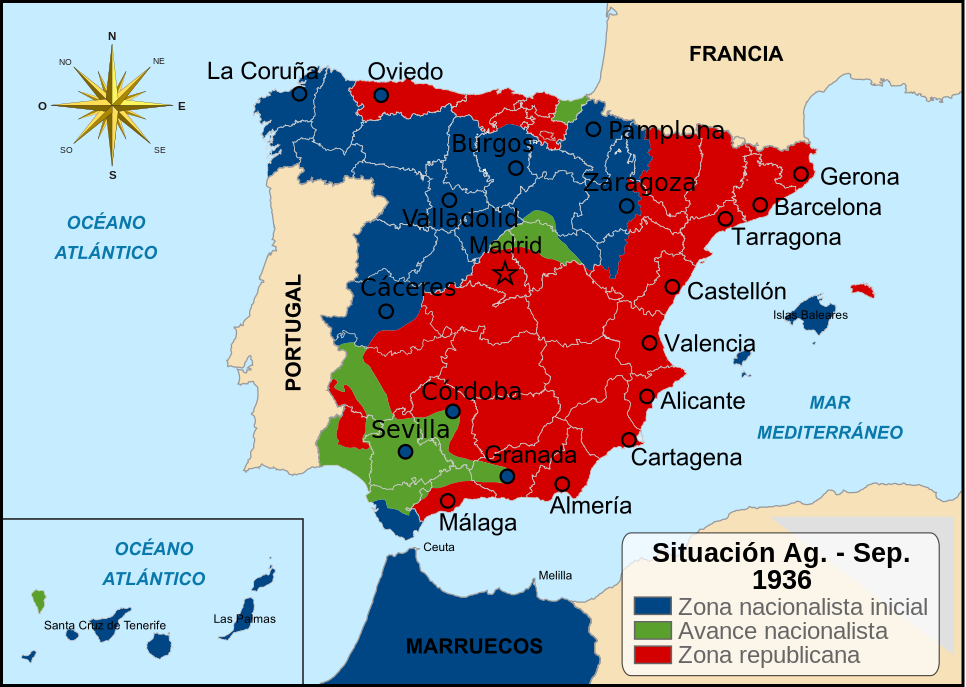
The Republicans controlled most of Aragón, the North of Spain, except Navarre, Catalonia, Levante, Madrid and nearly all of Andalusia. After the coup the power of the government nearly disappeared. Trade Unions and some popular organizations “took the opportunity to have a social revolution expropriating land and factories. At that time “milicias populares” were organized to defend the republic, but they were not coordinated and sometimes they quarreled among themselves. A few months later the popular Army was created. But anarchists and Nationalists disobedience to the government weakened the Republican side.