
Online Comics Reading Club: Superman Comics and Feminism
Section outline
-
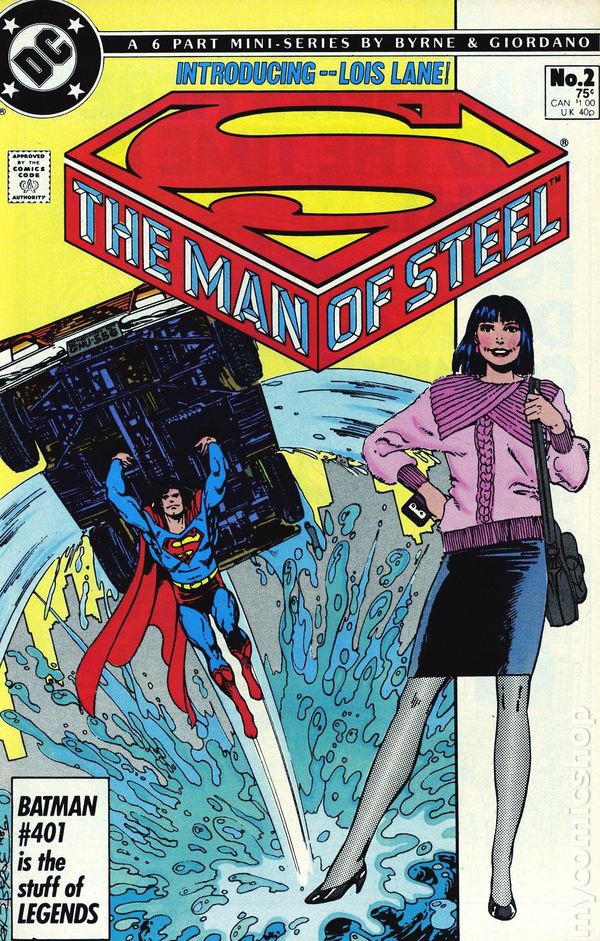
Here you’ll find some information about Lois Lane, and the third comic book we are going to read. This comic book fully introduces her after the first glimpse we had in the previous comic book when the famous couple meets for the first time in this new comics continuity. It is said that Lois Lane has reflected American mores and culture as she’s been developed throughout the years. So some comics scholars have summarized Lois Lane’s life from a feminist point of view, and here I’m going to give you some of their ideas.
When she was first created, Jerry Siegel and Joe Shuster’s original conception of Lois Lane was a character to be admired, portrayed as a confident and dynamic career-oriented woman. Although the Superman-Lois Lane-Clark Kent triangle was initiated in these first stories, romance didn’t play a major role in most plots.
During the 1950s, the decade of increasing domesticity in American women’s lives, the original idea of Lois Lane as an active, self-reliant reporter became less clear. More comics plots were devoted to her attempts to persuade Superman to marry her. In the 1960s, there was a slight shift and although she continually insisted in marrying Superman, none of the comic books were only devoted to this quest. She became a bit more independent, career-oriented, and more politically inclined.
In the 1970s and early 1980s, there was a transcendental change in Superman and Lois Lane’s relationship, because he openly admitted his love for her, but he never revealed his secret identity. After that, the unfolding of their relationship became a subplot running through the action stories. Although Lois Lane’s abilities as a reporter weren’t undermined in this period, her work was rarely the focus of the comics stories, and she never returned to her original characterization as a symbol of female autonomy.